

[SCRIPT] ART TALKS! the air belongs to the people
The script version of a conversation between my selves and Ruth Asawa's art.

This piece is part of an ongoing project called ART TALKS!
In ART TALKS! pieces, I write about the art and artists who have helped me heal, helped me get to know myself, and helped me remember that crying in public can be a good thing. This art and these artists have also strengthened my practice as a facilitator to social impact organizations.
These pieces are presented as (sort of) imagined conversations between my various selves and specific pieces or exhibitions of art.
This piece may look familiar. This version, though, is written in the stye of a script. This stylistic change is inspired by my dear friend Gabi Fitz, who generously turned the latest PLANT TALKS! into a script format. This is an experiment! Let me know what you think and I will keep playing with the format. We will see how ART TALKS! evolves…
One of the ways I care for myself is by spending time at art museums. I visit with my husband, with friends, and I take myself on solo dates. I carry a tiny notebook where I (sloppily) write my feelings and thoughts. I take photobooth photos by myself. Sometimes I come up with art-based jokes to send to my friends.
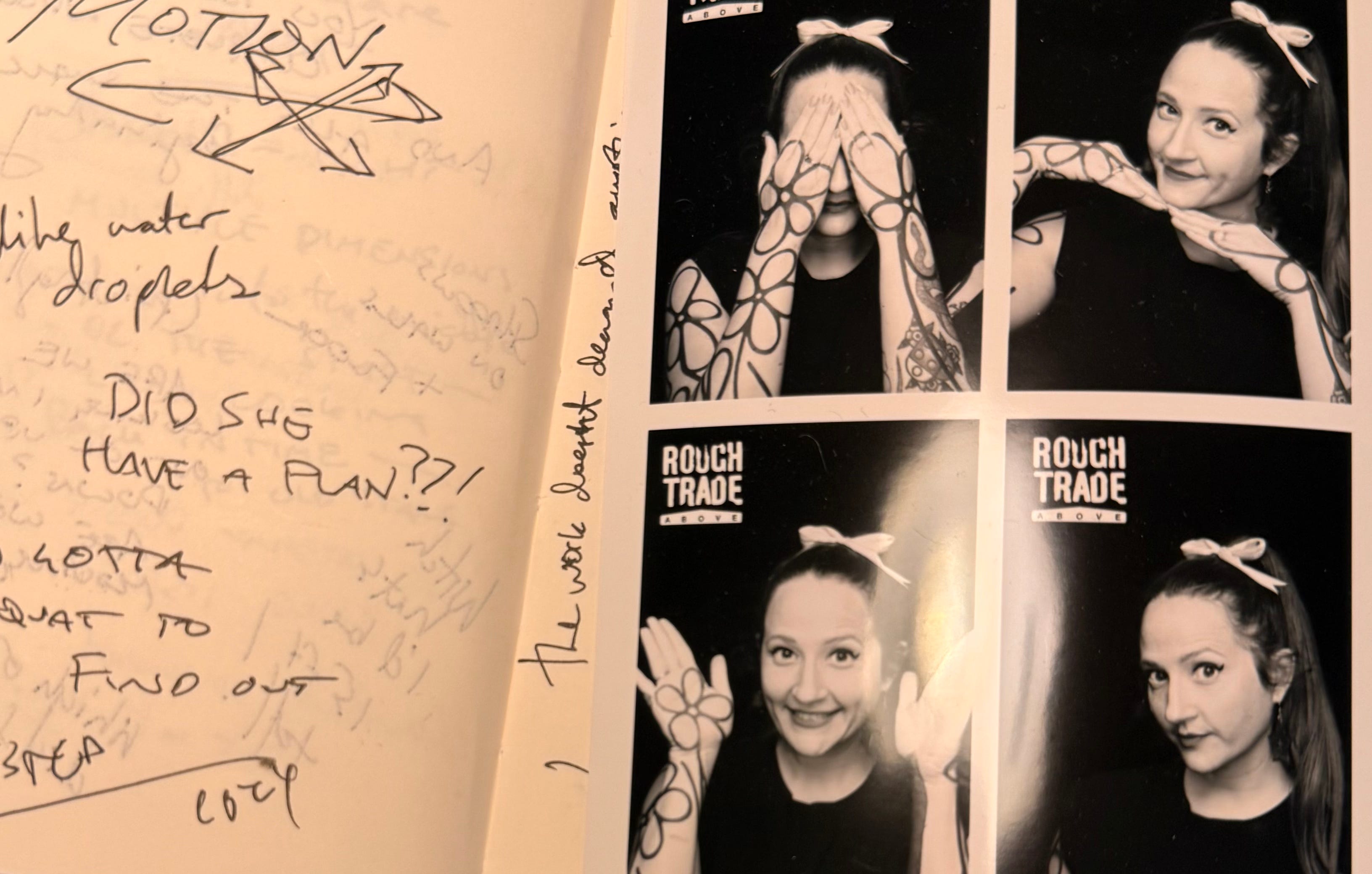
I’ve developed a ritual to engage with the art that excites me. If an exhibition or a piece makes me:
cry
ask “what are they talking about?!” multiple times
grunt
stare in disbelief
…I buy the exhibition book or a biography and I go home to learn everything I possibly can about the artist. If there are documentaries, I watch them. If there are articles, I read them. I yell at my husband and my friends about what I’m learning. I send crooked photos of passages in books accompanied by messages in all caps. Once I have a sense of how the artist thinks and works and lives and loves, I go back to the exhibition. It always feels different.1 Layers become more visible. The work is more relatable and more unbelievable.
This installment of ART TALKS! is born from my visits to the MoMA’s Ruth Asawa Retrospective, which closes on February 7! If you’re in NYC, get amongst it!
Ruth Asawa’s work is bonkers. From the Exhibition:
“Ruth Asawa: A Retrospective charts the artist’s lifelong explorations of materials and forms in a variety of mediums, including wire sculpture, bronze casts, drawings, paintings, prints, and public works.“
I didn’t know anything about Ruth Asawa, except that my friend Gabi told me I should see her work. My husband and I walked through the galleries and our mouths opened wider and wider as we saw Asawa’s lifetime of work. We’d turn a corner and there’d be MORE?! And they were even MORE wild than the works before?!
WHAT IS SHE TALKING ABOUT?!


Before seeing Asawa’s work, I didn’t realized how solidly and stubbornly the idea of the lonely, starving, suffering artist had taken root in my brain and heart. Walking through, I found myself thinking:
“She must have sacrificed a lot for this work.”
“There must have been nothing else in her studio or home in order to make room for these works.”
“It must have been quiet. Austere. Minimal.”
There’s so much to unpack here. Woof.
As I’m writing this, I’m wondering how much the parts of my white american brain that are soaked in internalized capitalism took the fact that Asawa and her family were forcibly incarcerated by the U.S. Government during World War 2 and said: “suffering, suffering, suffering. great art only comes from great suffering.”2
Hmm.
As these parts of my brain hummed and clanked in the background, the looped wire works hit me the hardest. I kept trying to find her starting point, to figure out just how “much” made up these pieces:
How much wire? (space)
How many hours did they take? (time)
How much do these weigh? (gravity)
On a subsequent visit, I realized that I was trying to solve the art. (More on this later.)
My husband—also trying to solve the art—pointed out that all of her wire works were called UNTITLED. Sorry, what?!
And here’s the thing: the wire works don’t represent all of her work. Not even close! Once I looked up from trying to solve the wire forms, I realized that drawings, lithographs, and paintings—delicate, beautiful, colorful—are all over the exhibition.
HMM.


A section in the exhibition is dedicated to her public art and her work with schoolchildren. What?! Wait, my brain decided that all of this was austere and serious and a little bit melancholy.
What are you talking about, “collaborating with schoolchildren?!”
What are you talking about, “she illustrated a guide to container gardening in partnership with her friends?!”
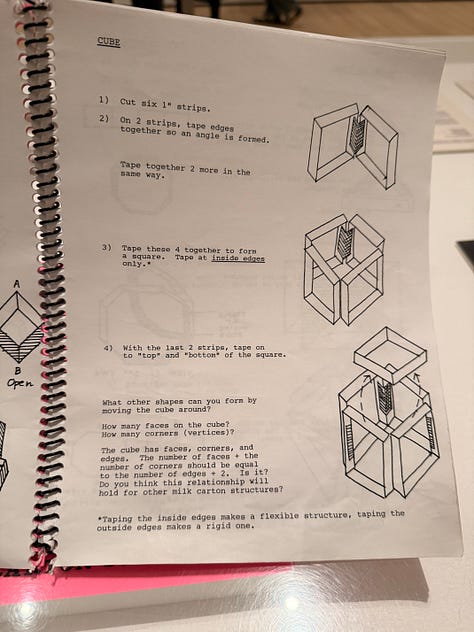
WHAT ARE YOU TALKING ABOUT, “SHE PUBLISHED A HOW-TO ON MILK CARTON STRUCTURES AND WORE A MILK-CARTON CROWN?!”
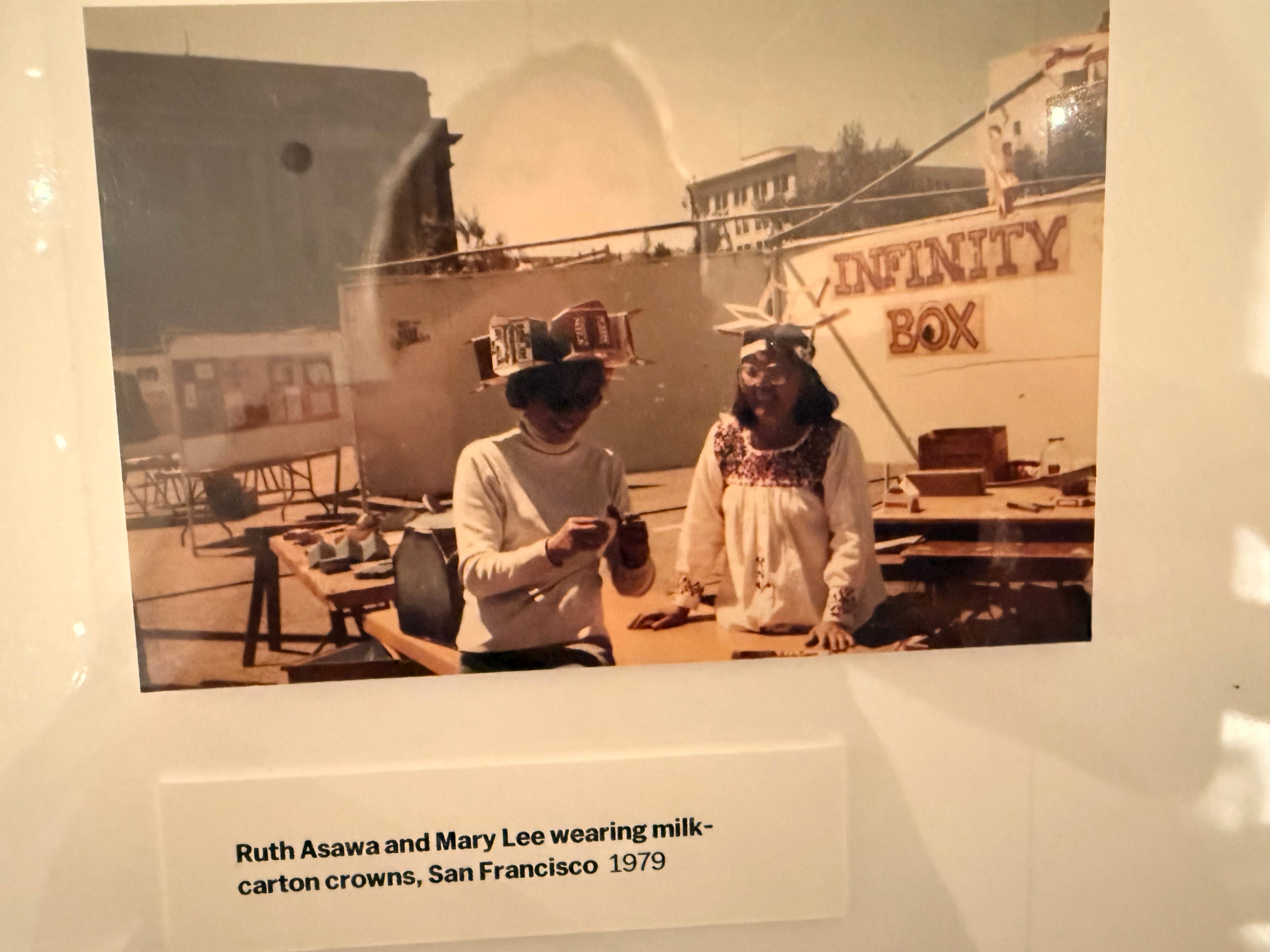
Hmm. We’re definitely getting the book.
On the way out, I picked up the Exhibition Catalogue and Jordan Troeller’s Ruth Asawa and the Artist-Mother at Midcentury. One of the blurbs on the back of Troeller’s book mentions “collaborative care” — more evidence that my “austere” theory was completely wrong. Just look at the cover:
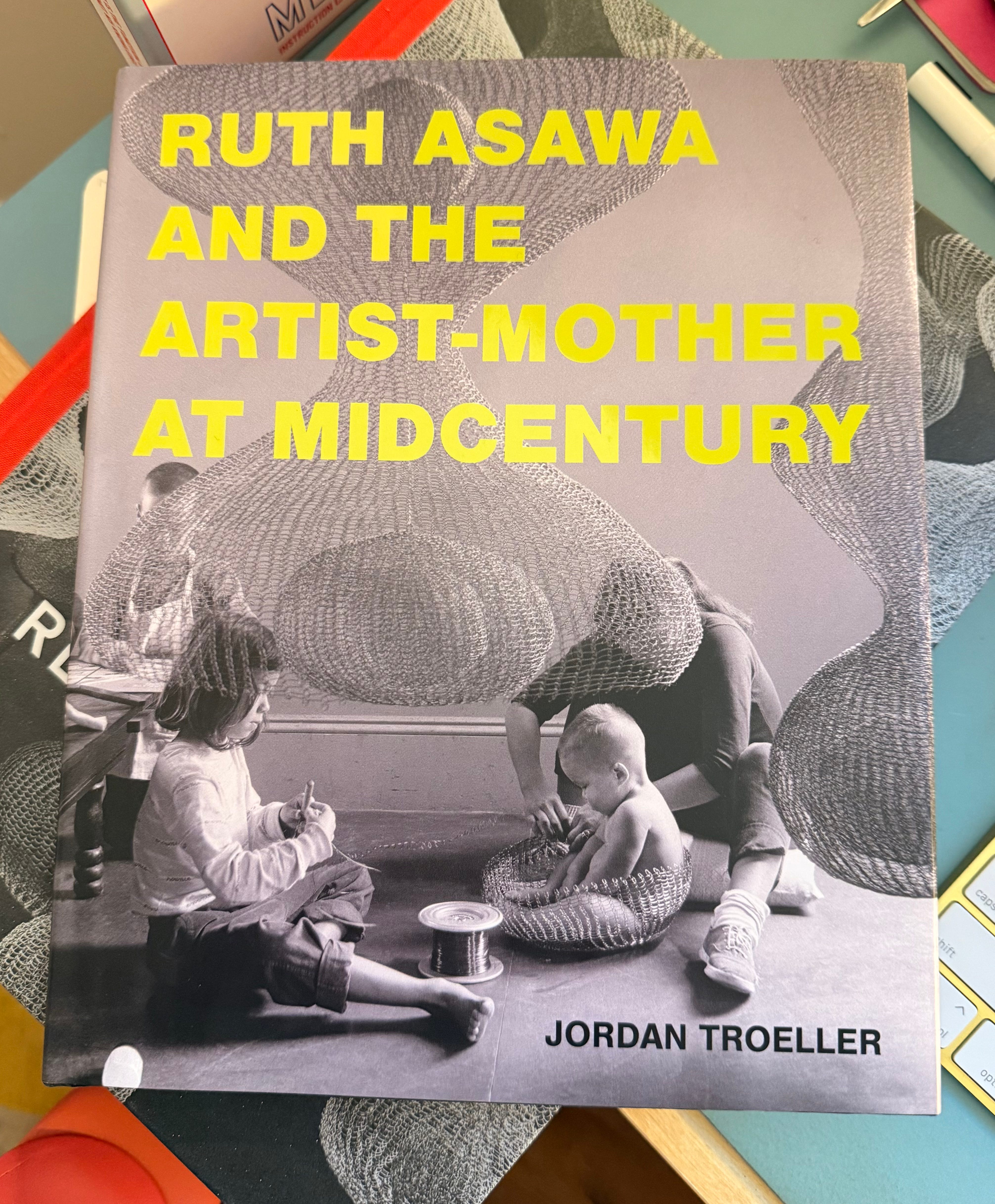
The books are both so great. They reflect Asawa’s joy, community, care, curiosity, and presence. My ideas of “austerity” are gone.
Each book offers some of Asawa’s thoughts, in her own words. These ideas translate to so many things, and they got me thinking about my own facilitation practice.
Ruth Asawa on her wire sculptures:
“I am able to take a wire line and go into the air and define the air without stealing it from anyone. A line can enclose and define space while letting the air remain air.”
A core part of facilitating for social impact orgs (or anyone, for that matter3) is stewarding space. A facilitator takes up space, and a good facilitator does this in a way that creates even more space for the folks in the room. This makes me think about abundance—”space” isn’t a finite resource in this context. There aren’t 10 pieces of space that we have to scramble and compete for.
In more general terms: we don’t have to fuck each other over to survive. Solidarity. Abundance. The air is for the people.
Ruth Asawa on calligraphy and negative space:
“When you’re working in calligraphy, you’re not watching what your brush is doing, but you’re watching the spaces around it. You’re watching what it isn’t doing, so that you’re taking care of both the negative space and the positive space. In a way it’s like if you begin to apply that in a practical way, if you talk about one person, if you concentrate on oneself, you don’t really see yourself. But if you don’t concern yourself with yourself and you begin to become aware of the people around you, then that defines you.”
What’s not said is just as important as what is said. The folks not in the room are just as important as the folks who are. I tend to negative space in my facilitation practice through honoring silence, acknowledging the paths we don’t take, and being explicit about what we’re not doing.
Ruth Asawa on her artmaking process:
“Begin in the middle and move out from there. Let the medium do the work.”
We each have a middle. None of us can do this work alone. None of us are saviors. We can trust our colleagues to do their work from their middles, and if we’re supposed to, we’ll meet each other along the way and create new middles. This makes me think about surrender and trust. Let the medium do the work. Trust the people.
Also, some middles are not ours! Mind your business. Let the people work.
When this essay (or whatever it is) goes live, I will have visited the exhibition four times, and I will continue to visit until it closes on February 7.4
Below, I offer a conversation I’ve been having in my head with the pieces in the exhibition. This conversation is not a comprehensive analysis—or an analysis at all, really—of Asawa’s work.5 This conversation is the best way I could think to express how Asawa’s work and her ways of living and loving make me feel.
CAST OF CHARACTERS, IN ORDER OF APPEARANCE:
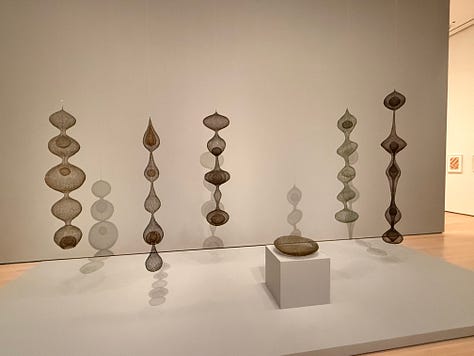
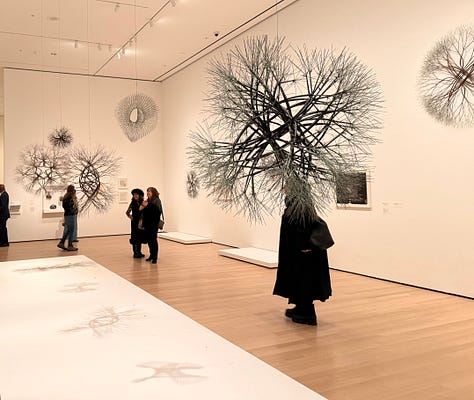
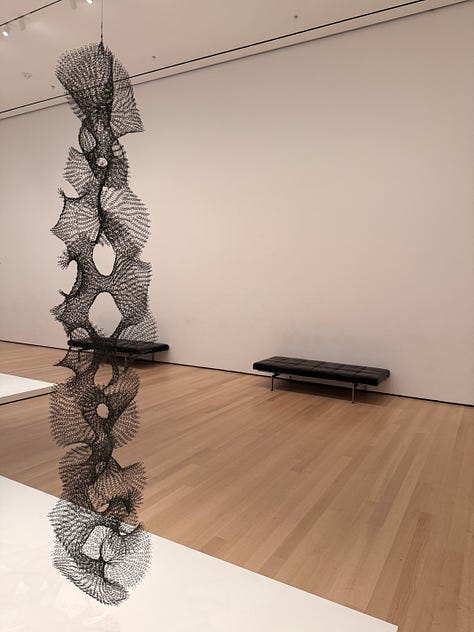
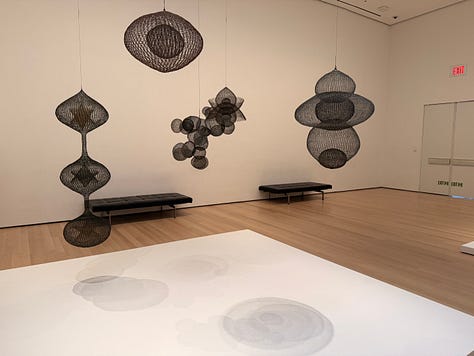
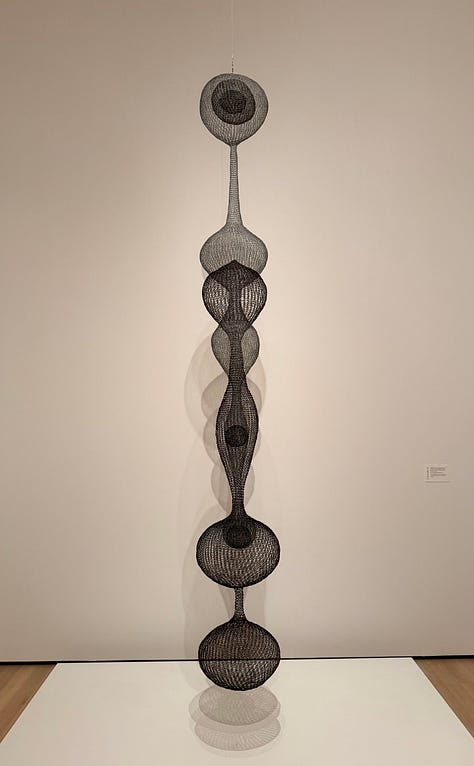
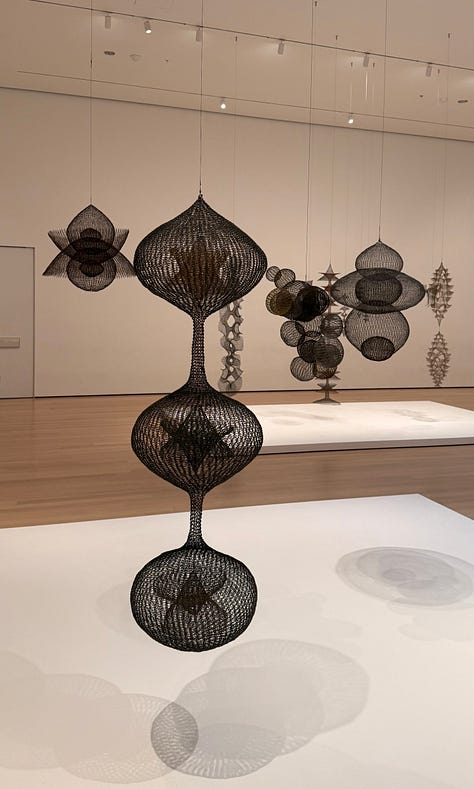
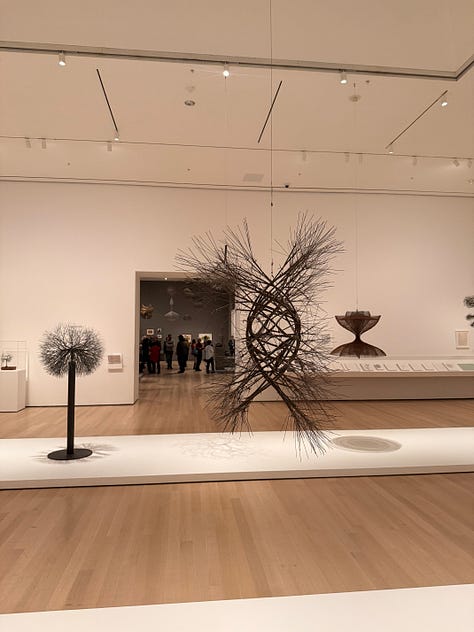
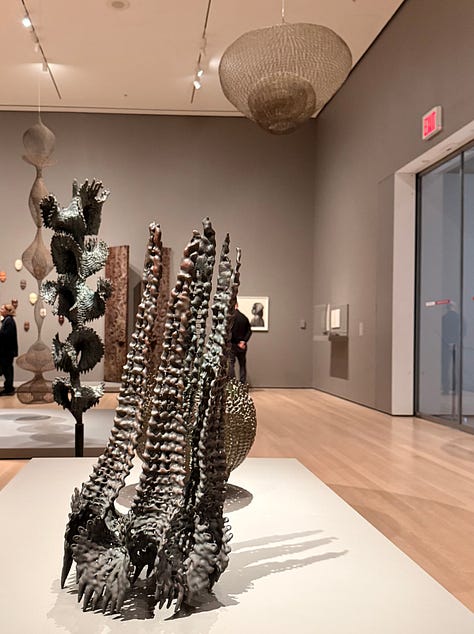
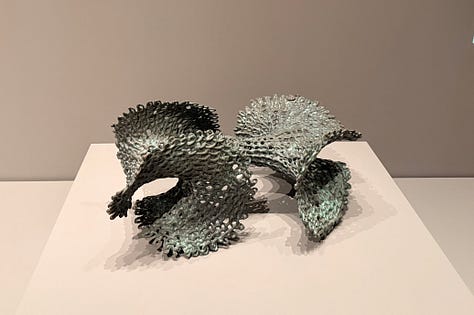
ASAWA’S WIRE: forms made from wire! Some are looped and woven like baskets, some are tied and bent and tied and bent and tied and bent again, some were placed in an electroplating tank for months where they grew layers of rough, green “skin.”
ASAWA'S WIRE ANALYST GV: my self who is a structured, curious, insufferable question-asker
RULE-FOLLOWING GV: my self who, despite my politics, is terrified to break the rules and terrified of getting yelled at
ASAWA: quotes from Ruth Asawa, pulled from the Exhibition Catalogue and Ruth Asawa and the Artist-Mother at Midcentury
FACILITATOR GV: my self who runs GV Advisory and helps folks have big conversations, get unstuck from each other, and make sense of their work and their world in new ways. (In other words, my self who helps groups of people talk to each other.)
REGULAR GV: my playful, mischievous self
LOGISTICS GV: related to Analyst GV. my self who is a structured question-asker. My efficient self.
FRIENDSHIP GV: my self that is obsessed with friendship
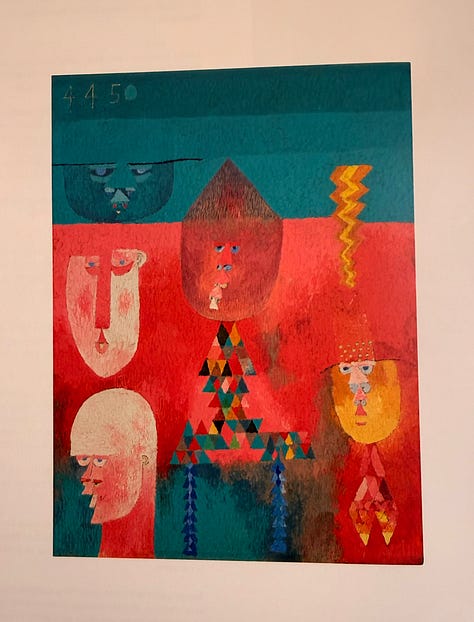
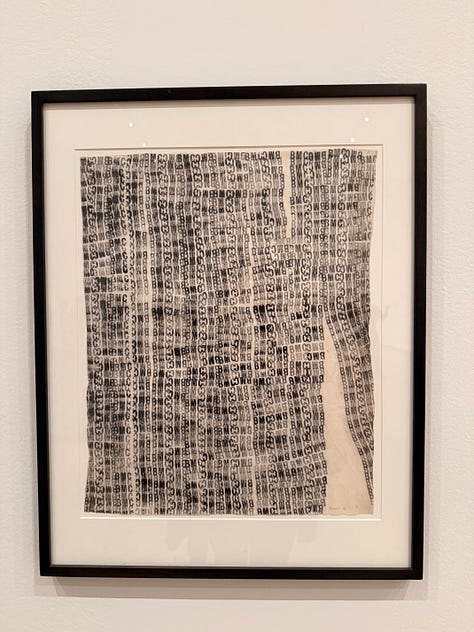
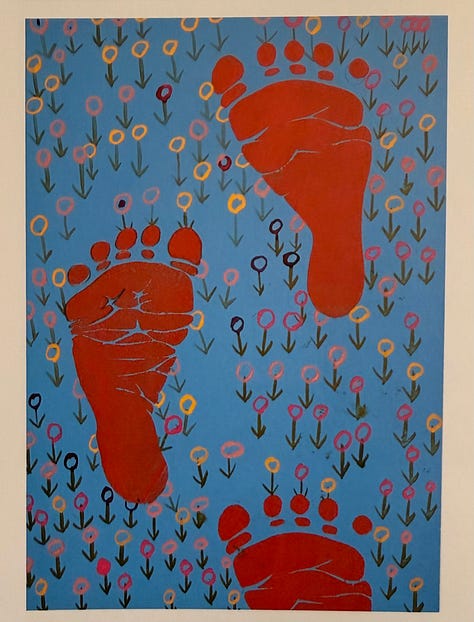
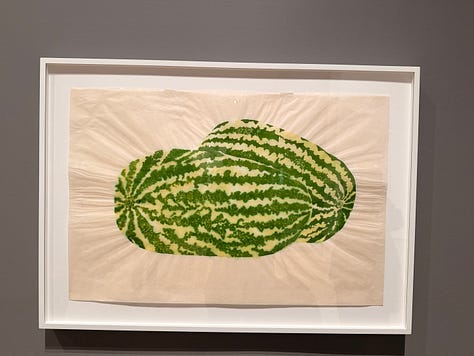
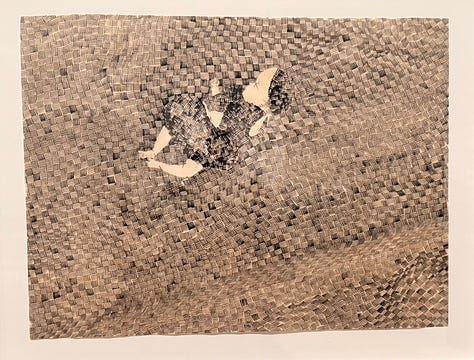
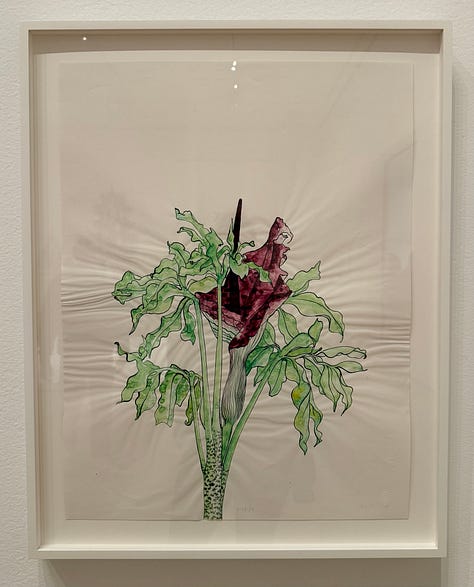
ASAWA’S 2D WORK: drawings, paintings, works made from repeated use of stamps …
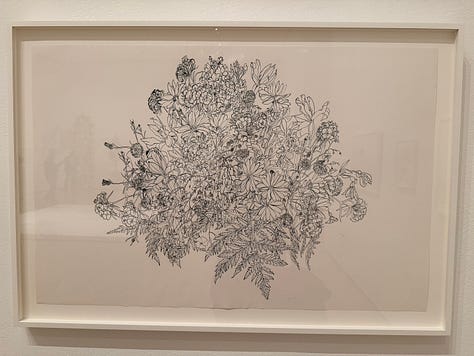
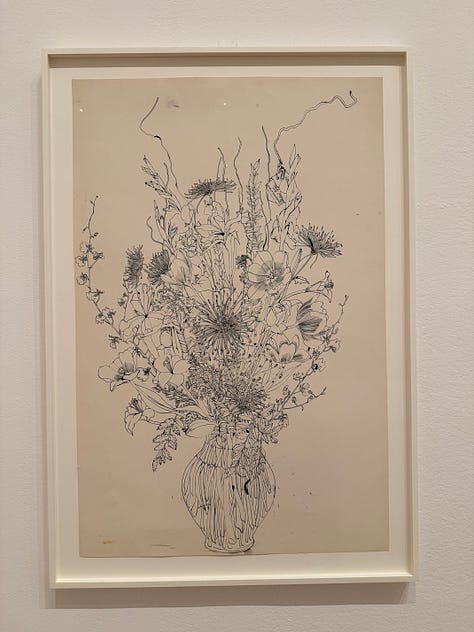
Within Asawa’s 2D work are ASAWA’S DRAWINGS OF BOUQUETS. I’m breaking these out on their own because their stories make me lose my mind in the best way. They’re delicate line drawings of bouquets gifted to her over the years by friends, her children, her husband (who grew beautiful flowers in their yard). The bouquet-gifter often received a drawing of their bouquet as a gift.
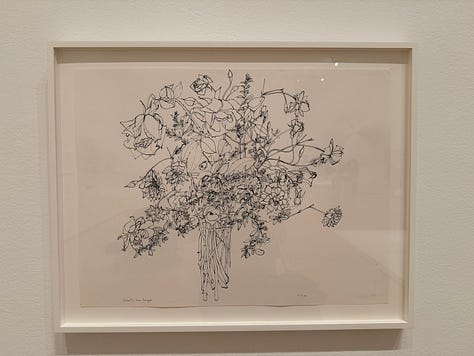
ASAWA'S 2D WORK
CONSULTANT GV: my project-managey, “I think I have an idea for how to do this” self, who has a part-time job at GV Advisory
ASAWA’S PUBLIC ART: fountains, murals, a rock garden … most—if not all—done in collaboration with schoolchildren and fellow artists
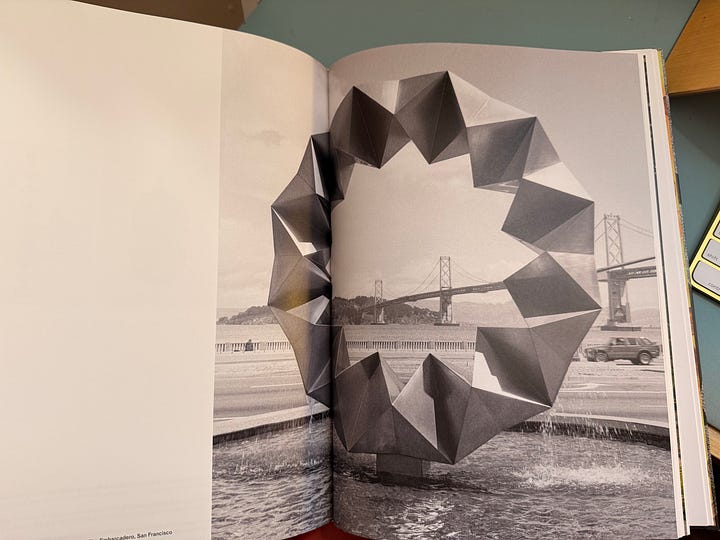
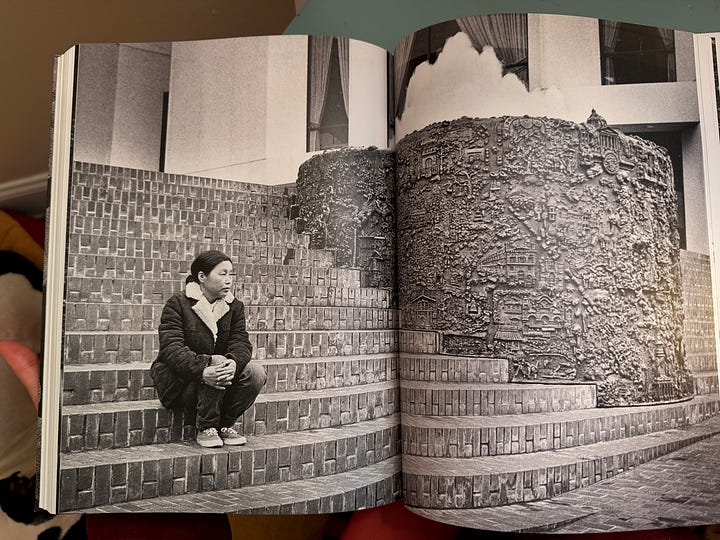
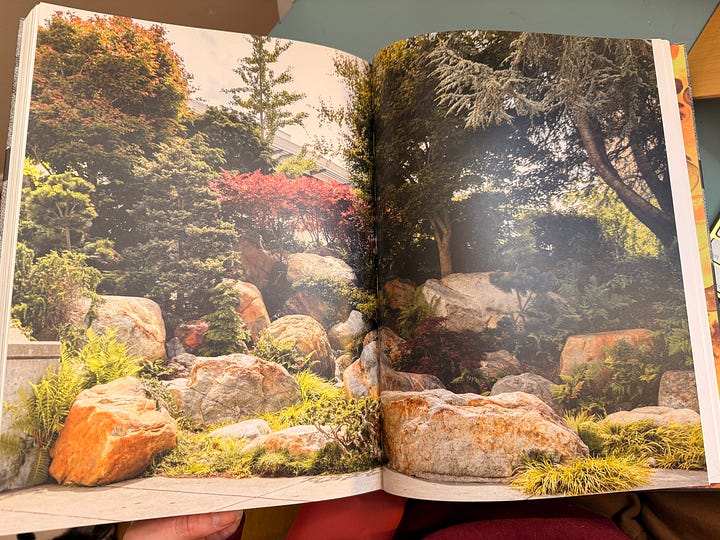
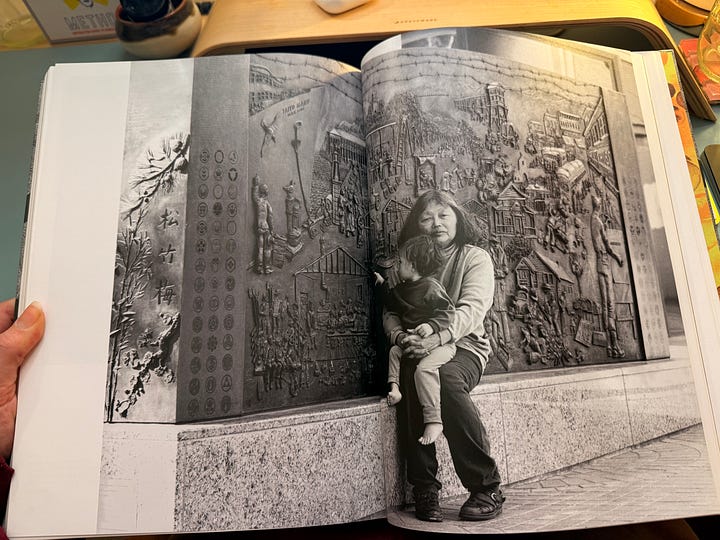
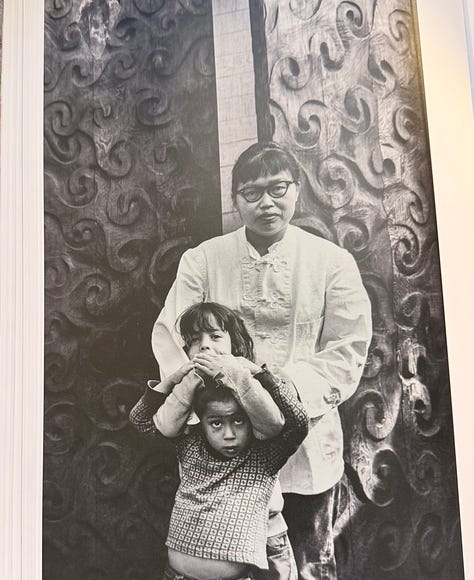
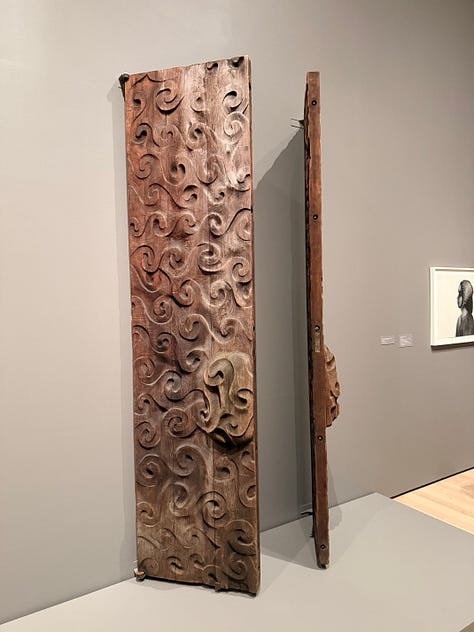
ASAWA'S PUBLIC ART (shown in the pages of the Exhibition Catalogue, clumsily photographed) THE DOORS TO ASAWA’S HOME: Doors. Doors Asawa carved from local Redwood, in partnership with her kids. Each kid got a “wave” to carve. These doors were the entry to the family home in San Francisco for many years.
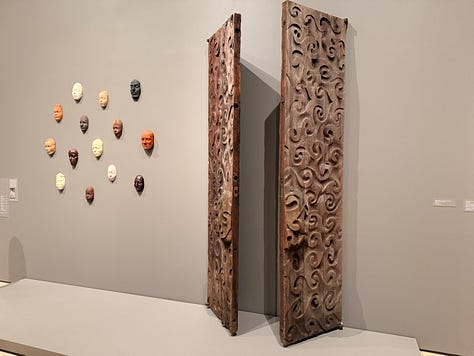
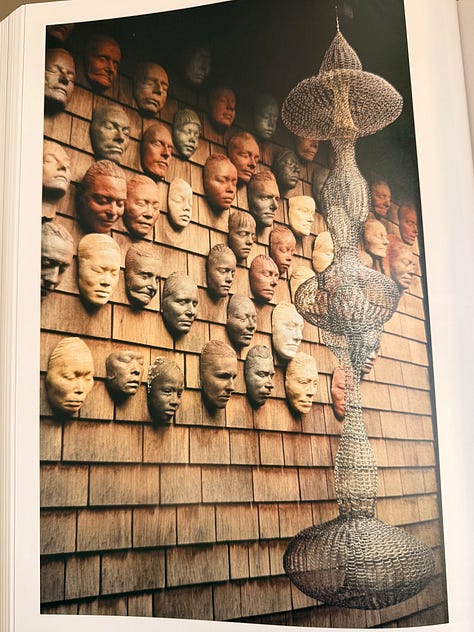
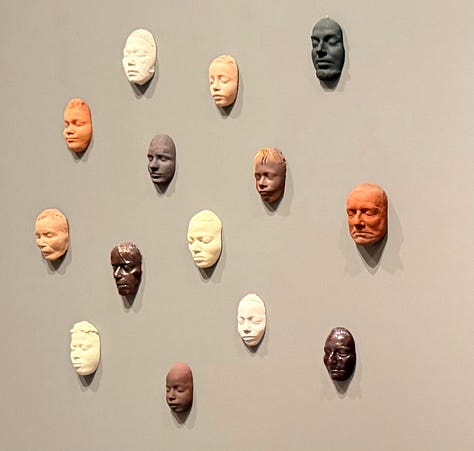
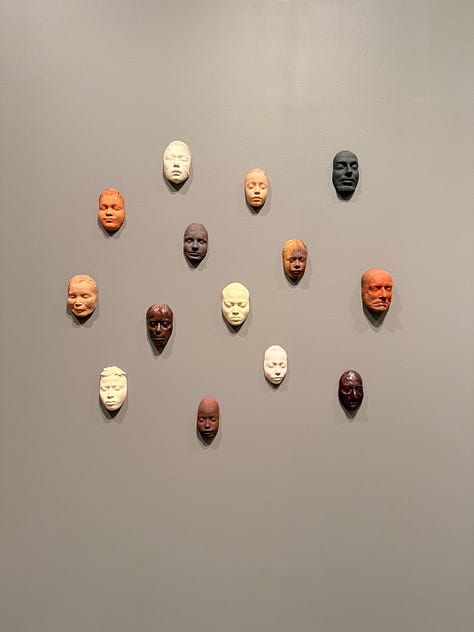
THE DOORS TO ASAWA'S HOME ASAWA’S MASKS: The masks Asawa made from casts of the faces of her friends, family and neighbors (from what I’ve read, these groups were one and the same). The masks hung on her house and documented the comings and goings of her community.
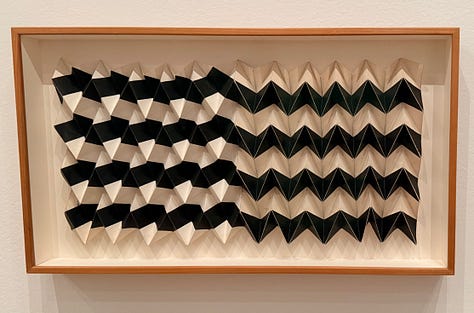
ASAWA'S MASKS ASAWA’S INSTRUCTIONS: throughout her career, Ruth Asawa published different instructions that laid out how to do what she did. Some of these informed classes she taught. The instructions I know of (though there are likely more) include steps for her patented folded paper panel, origami, and milk carton structures.
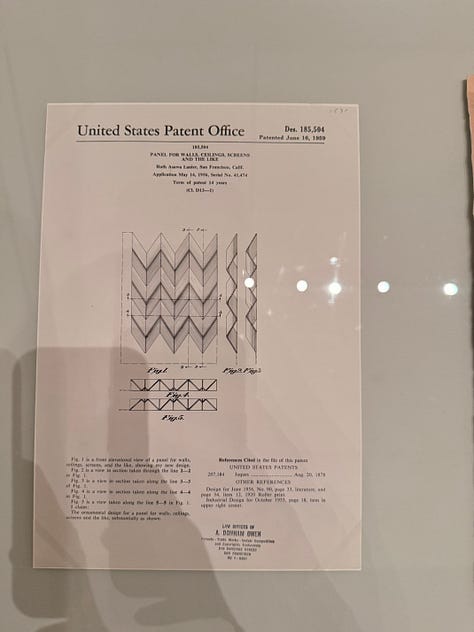
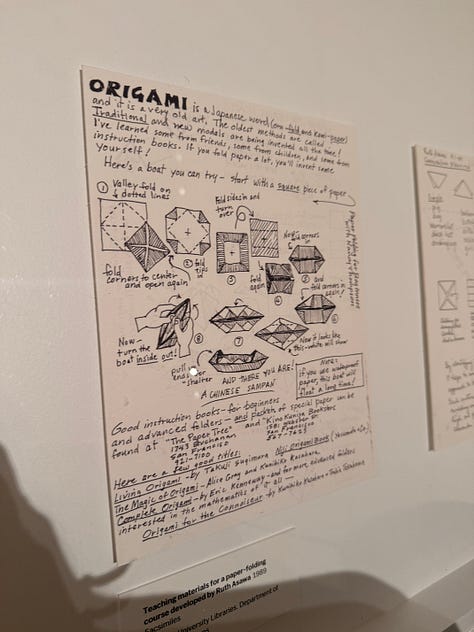
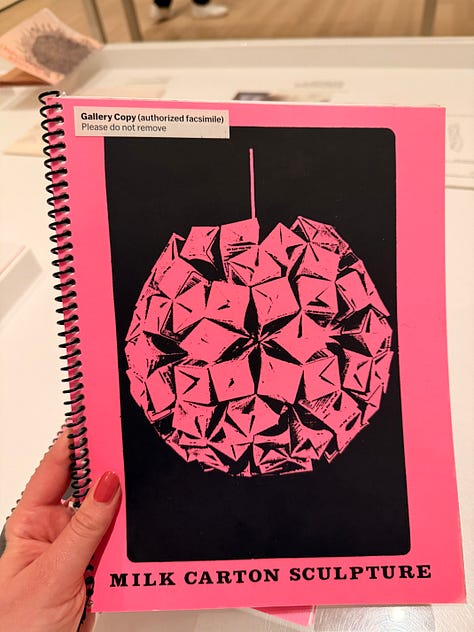
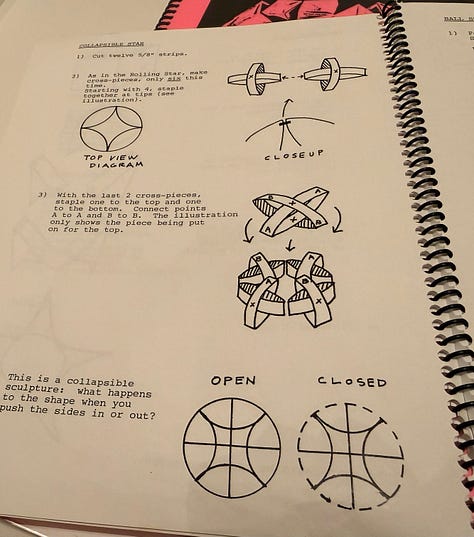
ASAWA'S INSTRUCTIONS


These are the voices (some imagined, some real) you’ll hear/read in the conversation presented below.
Ok! Let’s go!
[BEGINNING OF RECORDING — CRACKLING AIR]
[SOUND OF MUSEUM AMBIENCE — DISTANT FOOTSTEPS, THE SOFT MURMUR OF A CROWD]
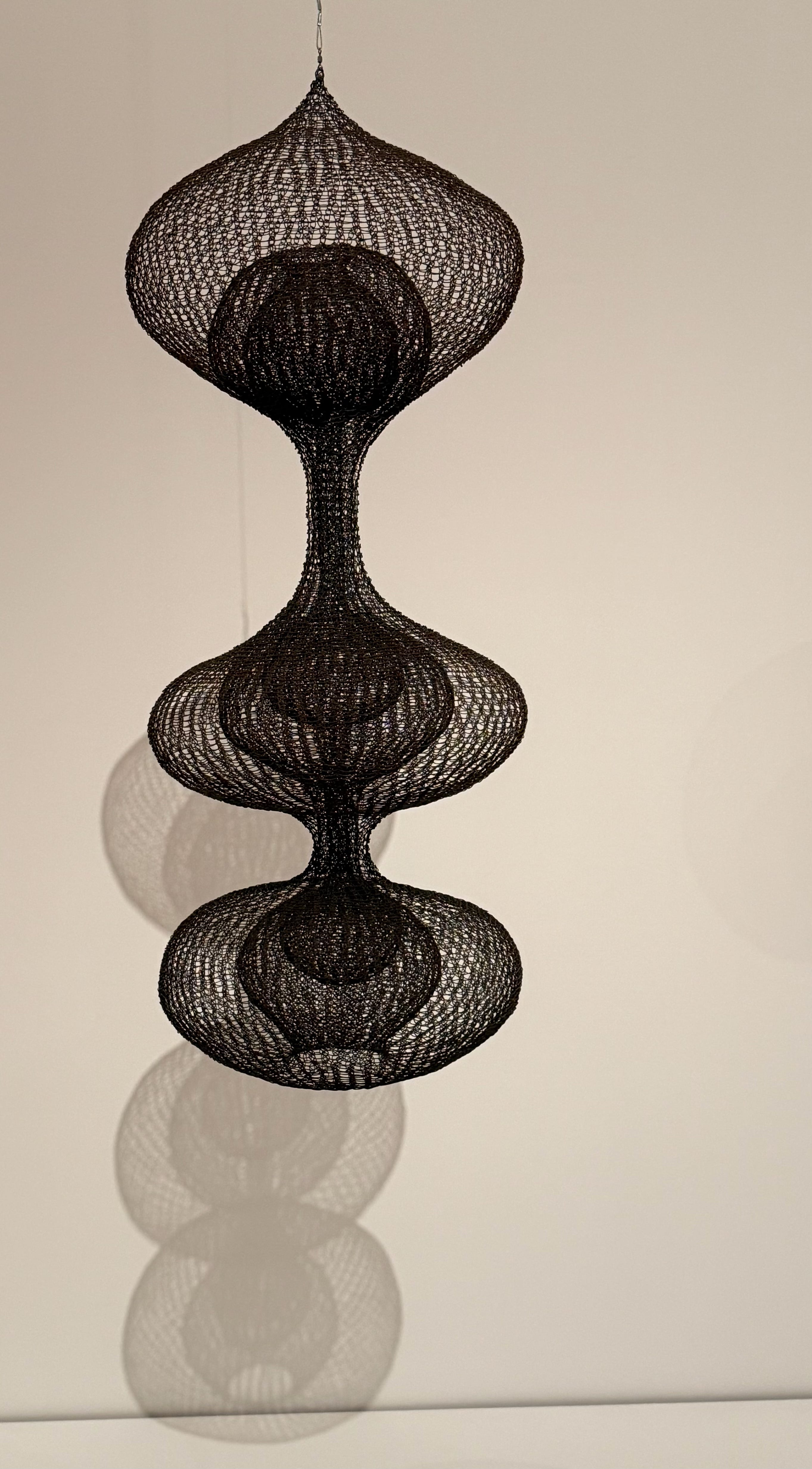
ASAWA’S WIRE: (informative, warm) The forms are transparent in some ways: you can see inside of and through them. Looking into the center “lobe” or “sphere” feels like looking back in time at old starlight, at the big bang, at a singular event. Looking through the forms and trying to trace them back to their origin feels like an exploration of space, of history, of time. One can see the complete, large whole at the same time as the small beginning.
ANALYST GV: (perplexed, impatient) But where is the starting point?
ASAWA: (matter-of-fact) “Begin in the middle and start from there. Let the medium do the work.”
ANALYST GV: (more perplexed, more impatient) OK BUT WHICH MIDDLE? MIDDLE IN RELATIONSHIP TO WHAT?
ASAWA’S WIRE: (confident, a little mischievous) The beginning is here, somewhere.
FACILITATOR GV: (quietly, in awe) Some things are not meant to be known. It’s enough to know that the beginning is there, somewhere.
ANALYST GV: (frustrated) Hmf.
[A BEAT — AS IF THE GROUP HAS TURNED A CORNER]
REGULAR GV: (playful, curious) Some of these look like they might be wormholes. I wanna climb in there and see where/when I emerge.
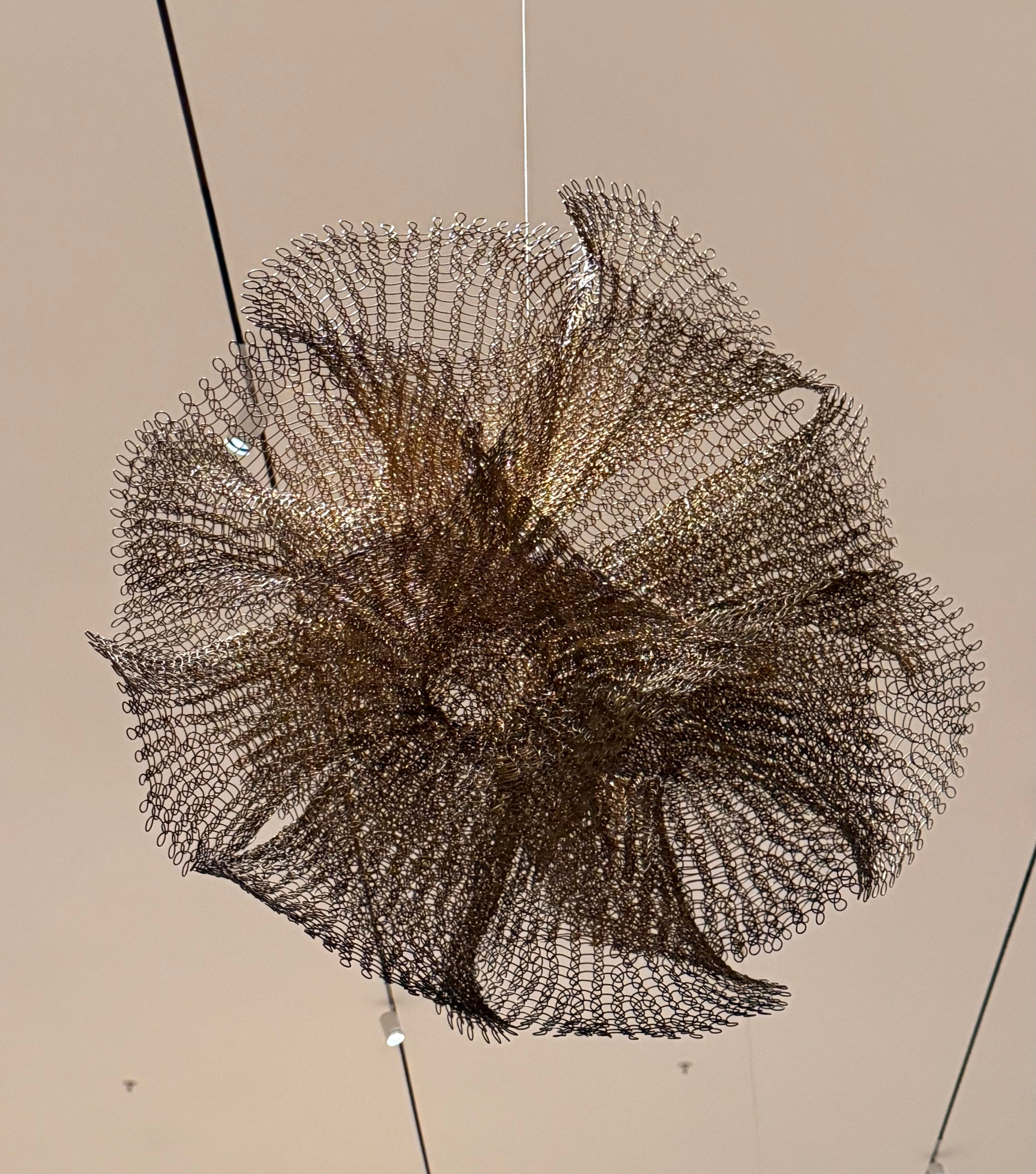
ASAWA’S WIRE: (inviting, open) The forms change as the viewer moves. Vantage point matters.
FACILITATOR GV: (agreeing, thoughtful)
Right, Vantage point matters. Where we sit in the organization, where we sit in the world, where we’re coming from … vantage point matters.
LOGISTICS GV: (baffled) Wait, is there ANOTHER form nestled in there?
RULE-FOLLOWING GV: (earnest, fearful) Am I allowed to just sit on the floor for a second? I don’t think I’m allowed.6
ASAWA’S WIRE: (philosophical) One can never see the whole form from one place. One is invited to move. The work invites, but doesn’t demand, movement. The work doesn’t demand anything, but it’s not passive.
REGULAR GV: (pacing, squatting, bending to look at all angles) I feel compelled to move, to walk around the pieces. To sit on the floor! To see from all possible angles. I wish there were ladders in the gallery.
At the same time, when I stay still, I think the pieces are moving. Slowly, gently.
FACILITATOR GV: (warm, hopeful) Each of us impacts the air we pass through. What if the movement of the pieces is a reflection of how this group of people is moving, together and separately?
A series of quiet, awkward, half-apologies as we all try to get a version of the same photo. But! The photos are all slightly different, and they will be shared with different people. They might not be shared at all.
Time travel. Multiple universes. Many possible futures.
[A LONG BEAT — AS THOUGH THE GROUP IS SUSPENDED IN CONTEMPLATION]
ASAWA’S WIRE: (wise, painting a picture) Something can be frozen and in motion all at once. Frozen enough for the forms to look like individual frames of a film of a water droplet falling into more water and splashing back out. The form is steady, but it still moves.
REGULAR GV: (satisfied) I feel so weird and good.
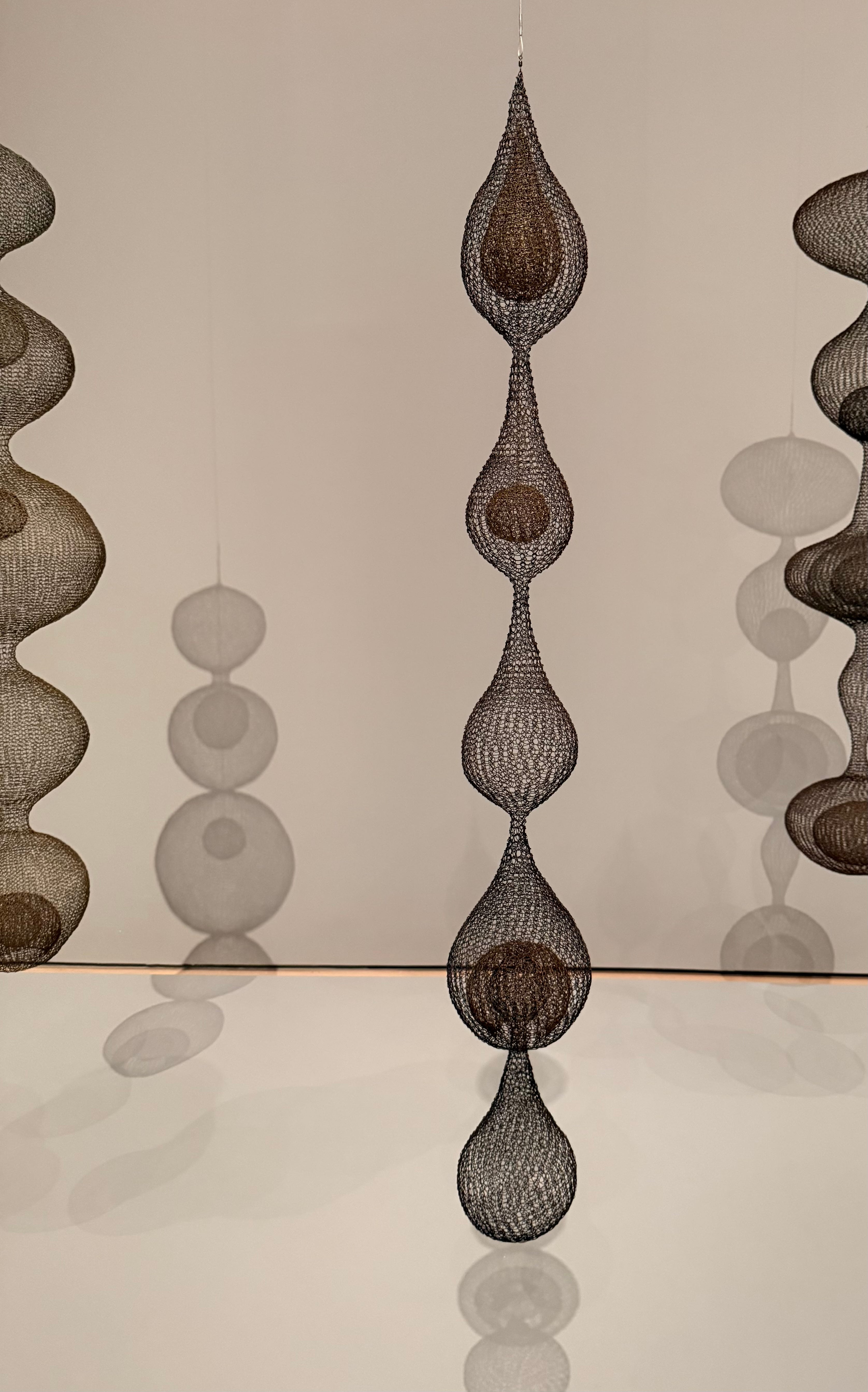
ASAWA’S WIRE: (dry, professorial) Sometimes the only way you know how many forms there are in a piece is by reading the titles, like UNTITLED (S.398, Hanging Eight-Lobed, Four-Part, Discontinuous Surface Form within a Form with Spheres in the Seventh and Eighth Lobes) or UNTITLED (S.395, Hanging Asymmetrical Twenty-Three Interlocking Bubbles), or UNTILED (S.797, Hanging Two-Lobed, Three-Layered Continuous Form within a Form).


LOGISTICS GV: (relieved, if not a little confused) Thank gods she developed this taxonomy with her family and named them the way she did. I keep going crosseyed trying to count the forms.
FRIENDSHIP GV: (genuinely moved, tearful) She developed the naming system with FAMILY?! Even the taxonomy was developed in loving community?! I can’t.
FACILITATOR GV: (objective, practical) Things don’t need flowery, mysterious names to be worthy or creative or beautiful. Call the thing the thing. There’s something so lovely and generous about clarity—it doesn’t seem like she wanted to outsmart the viewer. Up-front. Honest. No tricks, no gatekeeping.
There’s something here, too, about openness: I’ll just tell you what it is. I won’t make you guess. I’ll let you in on it from the very start. Communicate early and often!
LOGISTICS GV: (quickly, tripping over the words) HOW DID SHE MAKE THESE?
How long was the wire? Was it one long wire? If so, how did she not go crazy in the beginning of a piece, working with a very long piece? How much time did one of these take? Which ones did the kids help out on? Where did she store them? How heavy are these?
FACILITATOR GV: (gently, slowly) What would it look like for me to stop trying to solve the art?! Maybe the point is not to reverse engineer it, not to try to figure it out. Not to know it.
LOGISTICS GV: (annoyed) Ugh, fine.
[A LULL IN THE CONVERSATION — SOUND EFFECT: DISTANT OVERLAPPING CONVERSATIONS, SHOES SQUEAKING ON THE FLOOR.]
ASAWA’S WIRE: (informative, warm, repeating) The forms are transparent in some ways you can see through and inside of. Looking into the middle “lobe” or “sphere” feels like looking back in time at old starlight, at the big bang, at a singular event.
Looking through the forms and trying to trace them back to their origin feels like an exploration of space, of history, of time.
MOST OF ASAWA’S WORK: (interrupting, like an announcement over a loudspeaker) Motion in unknown directions at an unknown velocity.
ANALYST GV: (confused, dizzy) Am I looking in? Out? Down? Up? Am I moving? Am I staying still? Where is the movement coming from?!
ASAWA’S WIRE: (informative, warm, repeating) One can see the complete—often large—whole at the same time as the small beginning.
FACILITATOR GV: (glowing, with reverence) Process. So much of the work is about the process. The process is the point. What comes out of the process will likely be helpful, but that’s not actually the point! The awkwardness, the stumbling. The moments of tension and moments of release. That’s why I love facilitation—we can make the process visible!
[A BEAT — THE GROUP WANDERING OFF, STARING UPWARDS]
ASAWA’S WIRE: (urging the GVs to notice) The forms cast shadows. Shadows on the floor, on the walls. Shadows intersecting with each other.


FACILITATOR GV: (curious, thinking something through) What would a new wire form look like if it were based on the shadow of another form? How might different folks interpret the shadows? They might look totally different! I think there’s an exercise somewhere in here.
ASAWA’S 2D WORK: (professorial) The moisture changes the paper or the fabric. The work is always playing with dimensions and physicality. 2D is actually 3D.
The moisture has left an echo of the process.


FACILITATOR GV: (quietly, with a note of wonder) . . . “An echo of the process.” Process leaves behind evidence—an echo. The process can change us, heal us, hurt us … all of these things. Facilitation comes with responsibility. Facilitation is stewardship of time, space, emotion, and wisdom.
We—as humans living in the world together—have these shadows, these echoes. We’re carrying so much and leaving so much behind all of the time. What does it mean to be responsible for our shadows, our echoes? How would our work be different if we tended to our shadows and echoes with care?
CONSULTANT GV: (excited, affirming) Responsible knowledge management, baybee! Process documentation! Clear, compassionate norms around information sharing and storage!
FACILITATOR GV: (slowly, thoughtfully) We need space for aftercare, too. For naming the process after we’re finished, for recovery. For metabolizing the work! Sometimes we’ve got to sleep on it!
MOST OF ASAWA’S WORK: (revealing, as though pulling back a curtain) Wire, ink, and paint are mediums, sure. But so are the air, the paper, the shadows, the light, and the space. What we think of as the main “medium” is held by all of these other things. And they’re not passive!
FACILITATOR GV: (making a connection) Right! An “agenda” isn’t the medium for facilitation work. It’s the room. The culture, the vibes. The people! We’re constantly collaborating. Facilitation is not “my” work. It’s a collaborative art, morphed by the folks in the room (and the folks not in the room).
ASAWA’S PUBLIC ART: (proud, warm) These fountains and murals were created in collaboration with San Francisco schoolchildren. The kids had ideas and they had agency to act on those ideas.
FACILITATOR GV: (quietly, charmed) Collaboration is everything.
REGULAR GV: (excited, with conviction) So much JOY! Also, we should trust kids more than we do.
THE DOORS TO ASAWA’S HOME: (gently, but with gravitas) Massive, carved from Redwood. Carved in partnership with her children and installed as the entrance to their family home.
FACILITATOR GV: (in awe, tearing up) Her art was not separate from her home, from her family, from her humor or relationships. She didn’t sacrifice her art for her family or her family for her art. They were all parts of her world, working together, dancing together.
Creativity doesn’t have to come from suffering, from violence, from deprivation.
REGULAR GV: (hopeful, with a note od melancholy) I’ve been unlearning the idea that growth comes from deprivation. Uprooting internalized capitalism is a lifelong project.
ASAWA’S WIRE: (softly) Intersection doesn’t mean destruction. Intersection is part of what keeps the forms whole, together. Each individual form has boundaries, even if they can be hard for the viewer to discern—they’re there.


FACILITATOR GV: (firm, loving) We depend on each other but we don’t destroy each other. Boundaries are love.
FRIENDSHIP GV: (sighing, grateful) I love my friends. I love my marriage.
ASAWA’S WIRE: (inviting the GVs to look more closely) Some of the forms are “nested” within other forms.
FACILITATOR GV: (thoughtful) Safe. Held. Not squeezed or compressed, but solid. Structurally sound. These are community agreements, shared purpose, clear communication. Boundaries.
FRiENDSHIP GV: (yelling, joyful) I LOVE MY FRIENDS I LOVE MY MARRIAGE
MOST OF ASAWA’S WORK: (sincere, authoritative, still warm) The methods repeat. The subjects repeat. Masks of friends and neighbors, casts of baby feet. Loops and loops of wires over a span of many years. The repetition feels soothing. As we move through her work chronologically, the method tightens up. Repetition does not devalue the work.
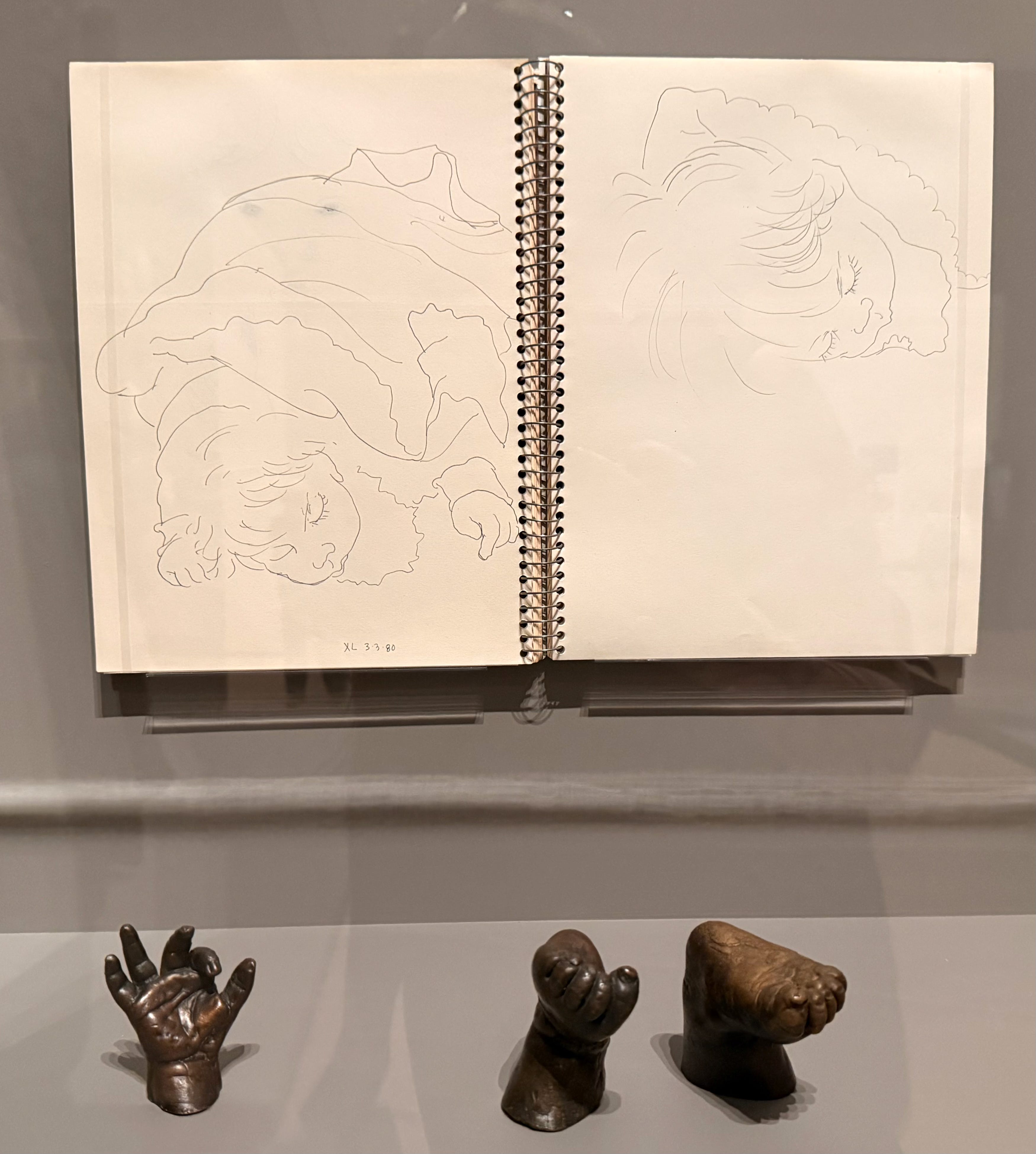
FACILITATOR GV: (with deep admiration) Repetition does not devalue the work. Repetition can be an act of care. Repetition is sometimes necessary. Repetition is how we hone our craft(s).
The whole Retrospective is like watching someone hone their craft. To see the progress—I don’t want to say “improvement,” because it’s not exactly that—over six decades is such a vulnerable, lovely, humbling, and human experience.
REGULAR GV: (light, excited, with a note of mischief) Sometimes we repeat things because we love them and they’re fun. Embrace frivolity! Do a thing for the sake of the thing! Baby feet are CUTE!
ASAWA’S DRAWINGS OF BOUQUETS & MASKS: (warm, inviting) The drawings of bouquets and the masks are histories of friendship and love. The flowers her husband grew, the bouquets her friends and family gifted her. The masks that hung in her home were the faces of friends, frozen in time.
ASAWA: (joyful, aware) “. . . when I cast a face I know I’m just capturing a minute of a person. Or if I cast a foot of a baby I know that baby’s foot will grow and grow and grow. . . . I know it’s going to go away but I like that, I like that moment.”7
REGULAR GV: (tearful, inspired) So much of her work is a monument to her friendships. These frozen, lovely moments in time are artifacts of love.
ASAWA’S INSTRUCTIONS: (inviting, practical) Simple, illustrated instructions say “you can do this, too” and “come with me.”
CONSULTANT GV: (excited, in agreement) Share the process! Creative Commons BY 4.0 licenses! We don’t have to commit to scarcity! Knowledge as a collective good!8
FRIENDSHIP GV: (delighted) Inviting other people along makes things so much more rich. No pretension! Let’s hang out! Yeah!
ASAWA’S WIRE: (revealing a fun fact) Wire forms in miniature. (According to Janet Bishop’s piece in the Exhibition Catalogue, A Seat at the Table: At Home with Ruth Asawa, these miniatures were born out of an assignment Asawa’s son received in high school: to build a shoebox model of a room in their house. This became a family project. Since some of Asawa’s wire forms were hanging in the house, she made miniature versions of the sculptures. Naturally.)


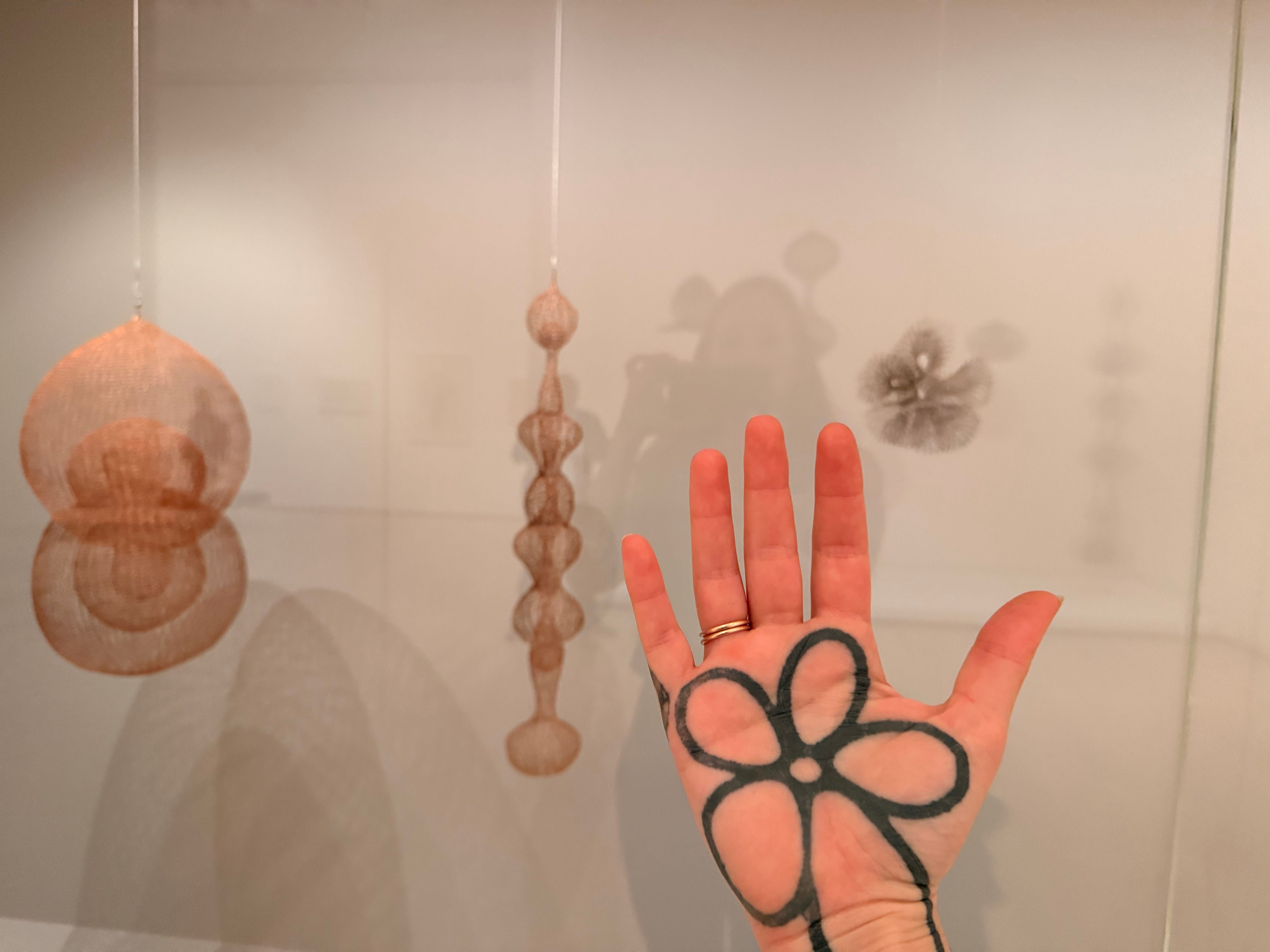
REGULAR GV: (slightly scandalized) She did this BECAUSE OF HER SON’S SCHOOL PROJECT?!
WHAT IS SHE TALKING ABOUT?!
ASAWA: (warm, like a closing benediction) “Doing is living. That is all that matters.”
ALL OF THE GVS: (quietly, grateful, feeling changed) Love as an action, love as a verb.9 I’m never gonna be the same.]
[SOUND OF THE GALLERY FADING — RECEDING FOOTSTEPS, VOICES MOVING AWAY]
[END OF RECORDING]
Living in NYC can be really great.
My high school orchestra Director told me this as I was preparing for my senior recital. Something like, “you’re lucky you have trauma, use it. these other kids don’t have your raw-trauma-talent.” (I’m paraphrasing, but that was the vibe.)
I would like to note that I'm not interested in helping exploitative, violent companies have more effective meetings and ways of working. I actually want them to have less effective meetings and ways of working. I want them to have more “gunk in the gears,” as they say.
I have a MoMA membership and I like to work at their cafe on Fridays! I can get you in for no dollars and if you want to bring a friend, we can get them in for five dollars. We don’t have to hang out or perform social-ness for each other, I can just get you in and you can see some art.
For that type of analysis, check out the Exhibition Catalogue and find art historians on Substack!
The last time I went to the exhibition, after this piece was mostly drafted, a school group was visiting the galleries, and they were ALL SITTING ON THE FLOOR. Sometimes I wish I wasn’t such a weenie.
Ruth Asawa Retrospective, Exhibition Catalogue, SFMoMA - page 39, from A Seat at the Table: At Home with Ruth Asawa by Janet Bishop
Hi Gabi!
bell hooks taught me!